
This performance in Youjian Pingyao shows the aesthetical standard of women in Qing Dynasty.


Bound Feet — Beautiful Like Flowers
Chinese women’s feet were bound in feudal China. This corrupt custom originated from as early as the Sui Dynasty (581–618), and became popular among people in the Song Dynasty (960–1279). At that time a woman with a pair of small feet was regarded as a beauty. Though it caused severe pain, many women bound their feet to follow the custom.
Bound feet were called “lotuses”, ranked according to foot size. Feet longer than 4 cun (pronounced /tswnn/ 寸, “the Chinese inch”, is a Chinese unit of length, equal to 3⅓ cm) were ranked as “iron lotuses”; a pair of under-4-cun feet were called “silver lotuses”; and under-3-cun feet were called “golden lotuses”. A pair of “three-cun golden lotuses” (三寸金莲) was regarded as the most beautiful feature of a woman in feudal times.


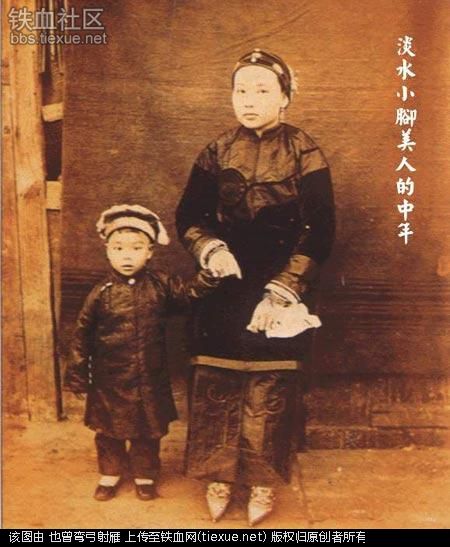
The Pull to Bind
In ancient times, women’s small feet drew so much attention that foot shape and foot size became very important standards to judge a woman’s beauty by.
Whether a woman had bound feet or not, and how she bound them, directly affected her marriageability. At that time, every social class saw big feet as shameful and small feet as something to be proud of.
A girl began to bind her feet from 5 or 6 years old. A long strip of cloth was used to bind her four toes (except the big toe) and sole, breaking them off and bending them into the arch of the foot, so as to form a pair of “four-inch golden lotuses”.
The pain was hard to imagine, but elders forced young girls to do it, ignoring their shouts and tears, in order to fulfil their responsibilities and guarantee the girl’s future — her marriage.
 the performance of heritage