Portfolio: The impressions of two generations – Three-inch Golden Lotus

Standard
Unbound7_ChrisRandle_lores

(The Photo from Unbound by Wenwei Dance,2006)


Introduction

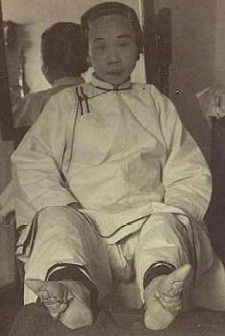
This is a project that aims to focus on feminism in China. The subject is foot-binding, a custom that reached its peak during the Qing dynasty, among the ethnic Han women. Women with bound feet were also known as “Three-inch Golden Lotuses”. The earliest records of foot-binding date back to the Northern Song dynasty, and only disappeared completely in the early years of the Republic of China.

This project was inspired by two generations of people: myself and my tainai (tainai is a term that the northern Chinese use to refer to their elders, in this case specifically to my great-grandmother). I was born into an agricultural family and grew up in a small village in the northeast part of China. When I was a baby, I was often carried around in a vegetable basket, while my parents tended to their crops. My great-grandmother watched after me in my earlier years, because my parents were usually busy working. She would lift me out of the vegetable basket and play with me. Thus, many of my childhood memories are of spending time with my great-grandmother. At the same time, I remember that her feet were extremely tiny and she walked with an unusual gait. Although I was curious, I knew that it was rude to ask her about it, so I never did.

As time passes, memories of our past fade away. This year marks the 105th anniversary of the abolishment of the feudal system in China (1912-2017). For the younger generations, however, the events of the Qing dynasty are so distant that they are almost forgotten. In our history lessons, we learn from textbooks, journals and magazines which were made for easy consumption of historical events. The events are stated by our teachers as hard facts and we are tested on our ability to memorise these facts, rather than being taught how to think critically about human behaviour through time. As a result, many young people soon lose interest in history.

In 2016, when I began studying in London, with wider internet access (the Chinese governments bans the access of certain websites such as Google and Youtube), I could develop critical skills for thinking about historical events. For the first time, I was able to access documentaries and literature regarding foot-binding and its process. This brought back memories of my great-grandmother, and it was only then that I realised I had almost forgotten someone who was once the closest person to me. Through deeper research on foot-binding in China, I became more interested on the topic, and decided to design my project based on it.

In today’s China, the younger generations do not have a good understanding of China’s history. This is because of the way the history curriculum is designed in schools, as well as a lack of social emphasis and public education on historical events. I believe that live performance can be an effective way of solving this issue. Live performance brings together the actor, the performance space, the subject of the performance, as well as the audience. The audience can interact directly with the other elements of the performance, and will be drawn in by dance, sets, props, which are more engaging than plain text. This educational method is not only attractive to the younger students, but also for the members of the general public.

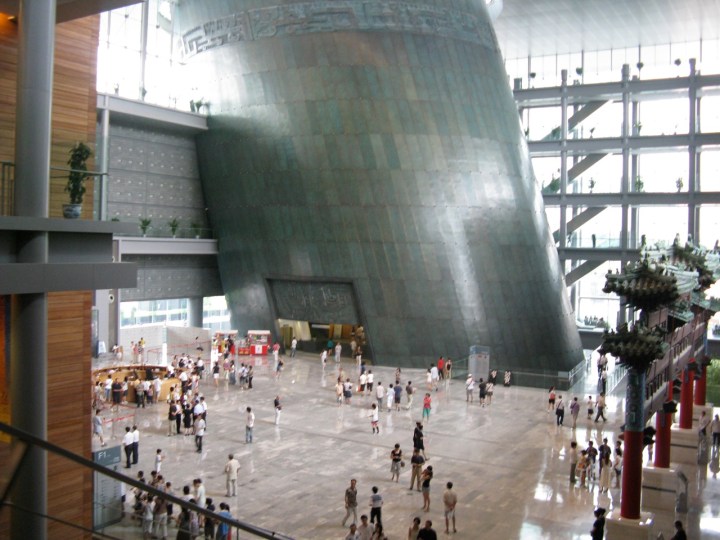
A suitable site for this performance is the Today Art Museum in Beijing. It is a private museum for contemporary Chinese art works, and focuses on exhibiting the work of young, emerging Chinese contemporary artists, as well as fostering greater international cultural and artistic exchange. Thus, it would be a good platform to present this Three-inch Golden Lotus project. I find art museums attractive because to me, they simultaneously represent three different times: the past (history), the present, and the future.

Aim and Effect

Due to the inadequacies in the education system, the young people of today lack understanding about foot-binding and how torturous it was for the women in ancient China. This project aims to involve audiences of all ages to participate in an interactive performance about foot-binding. Through participation, they can understand the entire process and effects of foot-binding: how the women of the past had little control over their own lives and how detrimental the feudal system was for the larger society as well. This project also aims to contribute to the body of literature and artistic work regarding feminist scholarship.

Background

Foot-binding (Three-inch Golden Lotus) was one of the results of the unbalanced patriarchal society during the time of the feudal system.

In the first year of the Republic of China (1912), Puyi announced his abdication of the throne on 12 February, marking the end of more than two thousand years of monarchy in China. This also meant the end of foot-binding for the women of that time. Previously, girls around five or six years old began to bind their feet, using a long strip of cloth to bind the toes towards the sole of the foot. This often meant breaking some of the bones in the foot so that it would grow in the ideal shape. The ideal shape of the three-inch golden lotus was often described as a bamboo shoot. Besides the obvious physical pain that the girls had to endure, this foot-binding was often forcefully carried out by the mother or grandmother. They had to ignore their children’s cries and screams in order to carry out their responsibility of ensuring a good marriage partner for their daughter.

The reason why this form of torture was able to reach such popular heights was, in a large part due to the culture of sexual awareness of that time. One example of this appears in Qing dynasty writer Li Yu’s works: he states that one of the highest aims of foot-binding is to please men sexually. He describes the small foot as ‘exquisitely beautiful’ and to touch it was ‘exhilarating and unforgettable’. In the well-known classical text, The Golden Lotus, praises about the beauty of the three-inch golden lotus also appear. The extent is so great that even the embroidered shoes which these three-inch golden lotus women wear are also endowed with sexual innuendos. During the Qing dynasty, there was an incident where a Chinese student travelled to Japan to study. He was stopped at the Japanese customs, and they asked him why he had a pair of small embroidered shoes, to which he shyly replied that he wanted to be reminded of his lover’s feet in his spare time (Sun, 2013).

Besides this, another purpose of foot-binding is to lower the chances of wives being unfaithful to their husbands. This is similar to the men in ancient Egypt who did not give their wives shoes to wear, or the men in Europe in the middle ages who made chastity belts for women. In the poorer areas of China, women still had to work to make a living, despite of their bound feet. It was only the affluent women who could stay at home and walk around less.

As a custom, foot-binding also led to other customs, such as the annual Datong feet competition, held in the province of Shanxi during ancient times. On this day, women showed their bound feet to people in order to gain prestige for having the most beautiful feet.

It was only at the end of the Qing dynasty, when China was made to open its doors to Western powers, that external culture and intellectuals called out the cruel nature of this custom, and it slowly began to fade away. However, it was only after the 1911 revolution that the custom of foot-binding came to an end, from the cities to the countryside villages. Today, we can still see some older women with ‘freed feet’ or ‘half-bound feet’, whereas the three-inch golden lotus women mostly do not exist anymore. The custom of foot-binding shows the unique aesthetic values, as well as the social values of men having more power over women, during a specific time in China’s history. The abolishment of foot-binding could also mean the liberation of women from their lower social status, as well as the progression towards modernity in China.

Curatorial form

The whole performance will follow a main character: a woman from the late Qing dynasty, experiencing and adapting to the changes in her environment as time passes. With the establishment of the New China, women are liberated. However, the generations of women who endured foot-binding during the feudal era have to find new ways to adapt to the new society. When this main character walks through the city with her bound feet and uncomfortable gait, the younger women stare and whisper to each other. Mischievous children mimic the way the old woman walks, while she is supported by her own grandchild.

This curated performance uses the method of narrative flashback to present this main character’s story in three chapters. The first chapter consists of the old woman and her grandchild going through daily life in the New China. The second chapter shows the middle-aged main character slowly adapting to the changes that the country and the society were experiencing during that time. The last chapter shows how the main character experienced foot-binding and the effects of it on her body and mind.


572ace778ba1a


Chapter one: Two of us

In the 1990s, an eighty year-old woman walks, supported by her grandchild, on a small road in the village. Through her silhouette, we can see how the two of them have completely different gaits. The older woman takes small but fast steps, as if she were brisk walking, whereas the young boy clutches tightly to her hand, skipping and jumping at times, asking questions at others.


300001051406132823107844728


Chapter two: The contemporary Qing dynasty woman

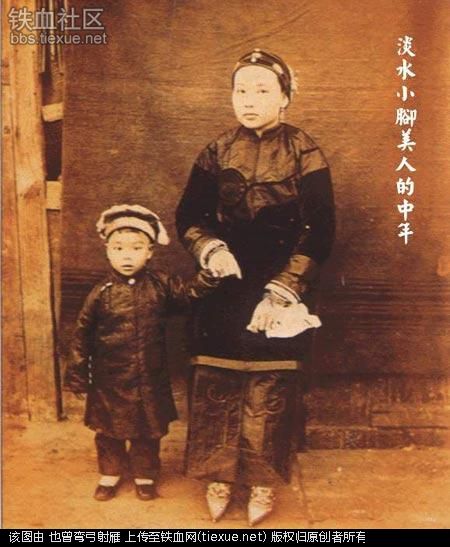
A woman with bound feet has experienced three different stages of China. The Qing dynasty, the Republic of China, and the New China. She grew up in the old society, but has to now adapt to the new society and find a new way to make a living. After losing her husband, she endures the cold looks of the people around her and carries the pressures of making a living by herself. Although she does not move around easily, she continues to work hard to support her family and herself. Her body carries a unique symbol: a living memory from history.


20160502d3af92c47330703ffc308dd9dc7b714c

Chapter three: Three-inch golden lotus

In the feudal era Qing dynasty, only women with small feet are able to find marriage partners, and only women with small and beautiful feel can find good marriage partners (men who are more wealthy and higher up in the social ladder). Under this feudal era environment, a five-year-old girl has her feet forcefully bound by her parents. She does not understand why her parents torture her like this, nor does she understand this deformed aesthetic. Least of all, she does not know that she is has just begun her journey through three different stages of challenges.


Portfolio: Three-inch Golden Lotus in 21st century

Standard

Painful Memories for China’s Footbinding Survivors

zhou_guizhen500-3c29f17f8ce9007413e848701ccc0d929fb10ae5

10024959

(Zhou Guizhen, 86, says she regrets binding her feet. “But at the time, if you didn’t bind your feet, no one would marry you,” she says. Louisa Lim, NPR, 2007)

Suffering for beauty is a concept familiar to most women, who have dyed, plucked or shaved their hair, squeezed their feet into uncomfortable high heels or even surgically enhanced parts of their anatomy. Millions of Chinese women went even further — binding their feet to turn them into the prized “three-inch golden lotuses.”

Footbinding was first banned in 1912, but some continued binding their feet in secret. Some of the last survivors of this barbaric practice are still living in Liuyicun, a village in Southern China’s Yunnan province.

Wang Life was just 7 years old when her mother started binding her feet: breaking her toes and binding them underneath the sole of the foot with bandages. After her mother died, Wang carried on, breaking the arch of her own foot to force her toes and heel ever closer. Now 79, Wang no longer remembers the pain.

wang_lifen500-aa36ad6cf3f3023cec93496d6a4aa7c8d70bcafcwang_feet500-00229e0afa5f1864897dd3aebab1b771dc1255c0

(Seventy-nine-year-old Wang Lifen baby-sits her neighbors’ toddler. Wang’s mother started binding her feet when she was just 7 years old. Louisa Lim, NPR, 2007)

‘Young Bones Are Soft’

“Because I bound my own feet, I could manipulate them more gently until the bones were broken. Young bones are soft, and break more easily,” she says.

At that time, bound feet were a status symbol, the only way for a woman to marry into money. In Wang’s case, her in-laws had demanded the matchmaker find their son a wife with tiny feet. It was only after the wedding, when she finally met her husband for the first time, that she discovered he was an opium addict. With a life encompassing bound feet and an opium-addict husband, she’s a remnant from another age. That’s how author Yang Yang, who’s written a book about them, sees these women.

U1366P1T1D11222738F21DT20061013024339

(A woman with binding feet in the supermarket, 2006)

“These women were shunned by two eras,” Yang says. “When they were young, footbinding was already forbidden, so they bound their feet in secret. When the Communist era came, production methods changed. They had to do farming work, and again they were shunned.”

http://www.npr.org/templates/story/story.php?storyId=8966942

Meet the last of China’s women to have her feet bound

article-2429992-1831922200000578-68_306x694

A 102-year-old is thought to be one of the few remaining women in China who has bound feet. Han Qiaoni, from Yuxian County in northern China’s Shanxi Province, had her feet broken and bound when she was just two-years-old.

She says her mother used a long cloth to wrap her toes, minus the big toe, so they were bent pressed against the sole of her foot. According to Han it took six months before she was able to walk properly and get used to the pain.

article-2429992-1831923A00000578-943_634x663article-2429992-1835854B00000578-861_634x736

The toes would then be bound into place with a silk or cotton bandage. The bandage would be removed every two days to allow them to be washed to avoid infection. They would then immediately go back on and often tighter than before. Girls would be encouraged to walk long distances so their weight would crush their feet into shape.

http://www.dailymail.co.uk/news/article-2429992/Han-Qiaoni-102-woman-bound-feet-toes-broken-just-2.html

Portfolio: Performance works of the Three-inch Golden Lotus

Standard

1. Contemporary dance – Unbound

Unbound by Wen Wei Dance

Choreography: Wen Wei Wang
Original performers: Scott Augustine, Karissa Barry, Jung-Ah Chung, Josh Martin, David Raymond, Tiffany Tregarthen
Original music: Giorgio Magnanensi
Lighting: James Proudfoot
Costumes: Kate Burrows
Sets: James Proudfoot and Wen Wei Wang
Premiere: June 2006; Canada Dance Festival (Ottawa)
Length: 60 minutes

dance_unbound_by_wenwei_dance_vancouver_poster_1Unbound4_ChrisRandle_lores
Weaving former Chinese traditions with modern perspectives, Unbound is an intense and stylish exploration of ideals of beauty, power, and gender. The starting point for Wen Wei Wang’s choreography reflects the former Chinese practice of binding women’s feet in pursuit of status and an impossible erotic ideal. Unbound transcends its cultural origins, unravelling sexualities, emotions and relationships that are universally familiar.

Unbound2_ChrisRandle_loresWen Wei Dance

Website:www.wenweidance.ca/works/unbound/

2. Beijing Opera – Three-inch Golden Lotus

Three-inch Golden Lotus

Time: September 22, 23, 2004

Venue: Wenzhou Lucheng Culture Center

Performance: by the Peking Opera Troupe of Wuhan, Hubei Province

This opera tells a story of ” a woman with bound feet”. At the end of the Qing Dynasty, Xianglian, a girl from a poor family in Gulian Town in the south, lost her parents at a young age. At the age of six, her grandma began to bind her feet, which caused her enormous pain but made her feet into “The Three-Inch Golden Lotus (San Cun Jin Lian)”. Ten years later, with the appeal of her small feet, she was able to get married to the foolish son of a rich family. Through a feet competition, she gained the man’s favor and became the representative of the conventional moral principles of feudal society. However, when the time came for her to bind her daughter’s feet, she hesitated, struggling between strong maternal love and the traditional feudal ethic code.

fa8541db0f76ce80f137cc377e7a5645

3. Dance drama: Liberation by Zhang Jigang

13782744_61ne0df12da9ffa40c692ac45f61b93211d

The bound feet of director Zhang Jigang’s mother was the inspiration for his latest musical creation, Liberation.

Zhang, who was one of the creators of the Beijing Olympic Games Opening Ceremony, tells the heart-wrenching story of a young woman who bound her feet and why society needed to change.

But Zhang’s most powerful influence was drawn close from home.

“My inspiration for the binding-feet dance comes from my mother,” he says.

“My 93-year-old mother is a normal kind and working-hard Chinese woman. She is optimistic, open-minded, enjoys life, good at singing and paper-cutting. She never talked to me about her bound-feet but I did watch her walking.”

Chinese women began binding their feet from the Southern Tang Dynasty (AD 937-975) and continued the practice for the next 1000 years.

Millions of women broke the arches of their feet and bound four toes underneath the sole of the foot with bandages, to create a “three-inch golden lotus”. It was an agonizing ideal of physical perfection.

Bound feet were a status symbol and the only way for a woman to marry into a “good” family.

Set in Shanxi province in the 1940s, the last years of the foot bounding practice, Liberation follows the life of Xiao Xiao who falls in love with her childhood sweetheart Liang Liang. To earn a good future, Liang Liang leaves his homeland to learn business.

One night, Xiao Xiao dreams that her beloved is seduced by a group of women with “three inch golden lotus” and the worrying girl decides to bind her feet. Years after, when Liang Liang returns with a pair of normal-sized embroidered shoes as a gift, he finds Xiao Xiao’s feet are broken.

The musical ends in the celebration of the founding of the People’s Republic of China, which bans the practice of foot bounding.

Xiao Xiao symbolizes the tragedy of female subjugation, but luckily, ever since 1949, Chinese women have never had to suffer the torture again.

Zhang was once famous for his choreography of The Thousand Handed Goddess of Mercy in which a line of dancers perform various delicate gestures with their arms and hands.

This time in Liberation, he gives full play to his imagination on the female dancers’ feet.

In Act 1, some 80 girls dance with bare feet to show the nature, innocence and freedom of the young girls before they have their feet bound.

In Xiao Xiao’s dream scene, 24 “feet-binding” women dance in a special way to display the charm of the “three-inch golden lotus”.

There is also a scene to portray “liang jiao hui”, a custom where women with bound-feet gather together to show off their “golden lotus”.

Like in today’s beauty pageant, young girls who had recently bound their feet show the “fruit” proudly while the old women walk in a careful, cautious and unsteady manner and make comment.

The “bound feet” dance first appeared in Zhang’s vocabulary in 1993 when he created a solo for dancer Li Yulan, who depicted many famous Chinese women, such as the concubine Yang Yuhuan and the White-haired girl.

d742b9fafadfa98349cfbc985faa9f1b2150221-49e969f01163d7f113782744_41n

In his 2004 production A Hand of Wide Jujube, he choreographed a group dance for the “feet-binding” women.

“I also saw my mother help my grandmother who was also bound her feet and this inspired me to create the scene where grandmother persuades Xiao Xiao not to bind her feet,” Zhang says.

He says foot-binding is an extreme example of how women had to suffer to satisfy men’s tastes.

“What’s more, foot-binding limited women’s mobility and therefore her ability to take part in politics, social life, and the world at large,” he says.

“Bound feet rendered women dependent on their families, particularly their men, and therefore became an alluring symbol of chastity and male ownership, since a woman was largely restricted to her home and could not venture far without an escort or the help of watchful servants.

“I wanted to use Xiao Xiao’s tragedy to tell that New China’s ban of foot-binding has freed women physically and mentally. It’s a liberation.”

The musical Liberation is running at the Great Hall of the People till Monday.

(China Daily 09/04/2009 page18)

Portfolio: The curatorial project site – Today Art Museum

Standard

The Today Art Museum is a private, non-profit museum located in Beijing. The museum’s mission is to support the development of Chinese contemporary art.

The Today Art Museum was founded by Zhang Baoquan in 2002. The museum’s aim is to promote Chinese contemporary art based on an internationalised vision and a contemporary ideology. As the country’s first non-for-profit, non-governmental art museum in China, the Today Art Museum is dedicated to establishing an appropriate development strategy for museums of its kind within a Chinese context.

20140122111810_7581tam2

“Foothold on today, outlook for tomorrow” is the Today Art Museum’s slogan. The museum’s focus is on Chinese contemporary art, its trends and key figures. At the same time, the institution strives to discover and support young artists in the community. Through the construction of a larger institutional framework and by carrying on relevant academic practices, the Today Art Museum hopes to solidify its standing in the history of art and offer a multi-tiered approach to China’s burgeoning art scene. The museum also promotes international dialogue through exhibitions and events that provide structure for meaningful cultural exchange between Chinese and non-Chinese artists and organisations.

60542389dd21c30a6d7c46ab9d5dafdc

The Today Art Museum explores sustainable development for China’s private museums, adopting a more pragmatic approach that will gradually form a sound financial model for similar institutions.

The exhibition of “three inch golden lotus” in Today Art Museum.

Website:http://www.todayartmuseum.com/cnindex.aspx

Portfolio: Three-inch Golden Lotus in Qing Dynasty

Standard

This performance in Youjian Pingyao shows the aesthetical standard of women in Qing Dynasty.

se7477376o4YBAFOyU0WAVt__AAX8P1jtWEg817_b

Bound Feet — Beautiful Like Flowers

Chinese women’s feet were bound in feudal China. This corrupt custom originated from as early as the Sui Dynasty (581–618), and became popular among people in the Song Dynasty (960–1279). At that time a woman with a pair of small feet was regarded as a beauty. Though it caused severe pain, many women bound their feet to follow the custom.

Bound feet were called “lotuses”, ranked according to foot size. Feet longer than 4 cun (pronounced /tswnn/ 寸, “the Chinese inch”, is a Chinese unit of length, equal to 3⅓ cm) were ranked as “iron lotuses”; a pair of under-4-cun feet were called “silver lotuses”; and under-3-cun feet were called “golden lotuses”. A pair of “three-cun golden lotuses” (三寸金莲) was regarded as the most beautiful feature of a woman in feudal times.

100249551002495610024932

The Pull to Bind

In ancient times, women’s small feet drew so much attention that foot shape and foot size became very important standards to judge a woman’s beauty by.

Whether a woman had bound feet or not, and how she bound them, directly affected her marriageability. At that time, every social class saw big feet as shameful and small feet as something to be proud of.

A girl began to bind her feet from 5 or 6 years old. A long strip of cloth was used to bind her four toes (except the big toe) and sole, breaking them off and bending them into the arch of the foot, so as to form a pair of “four-inch golden lotuses”.

The pain was hard to imagine, but elders forced young girls to do it, ignoring their shouts and tears, in order to fulfil their responsibilities and guarantee the girl’s future — her marriage.


Essay extension: The Combination of Live Performance and Heritage Site

Standard

The real scene live performance Youjian Pingyao combines local ancient elements with modern multimedia technologies to create an awe-inspiring experience. The site is rather different from the traditional one with a structure very similar to a maze, with complex spatial layouts. Thus, their contestation and diversity gives spectators a degree of flexibility in the process of the performance, and enables “deconstruction and reconstruction of the meanings of the sites”.

6e2b7be04bd113bf2fd66312eb861e49cghzfftwbosai8fraajph8zca2m325

In the performance of Youjian Pingyao, narrators illustrate in every theme area, which is an innovative idea. The combination of dialogue and dance performance is a useful method for spectators to join the scene of the performance. As a performance that uses the space of a heritage site as a performance space, Youjian Pingyao brought together to dance, language, props and site as a cohesive performance that seeks to bring a historical story to life.

banner1-41386229397382856852312edd1cc39a40536885e33a88f6f1838f7ec2f94992af

The combination of a live performance and the cultural heritage site have allowed for new possibilities in performance. It brings the audience physically closer to the performance, and uses the explicit historical background of the site to depict different themes. This allows the audience members more agency to shape their own performance experience, as well as learn about history and culture. These site-specific performances have made use of advancements in technology, using lighting, props and costumes to enhance and shape the visual effects of the site. This allows for a sense of the fictional within the real space, which in turn allows the audience to immerse themselves within the performance as a nostalgic-scape, and not just a straightforward presentation of a real space but an extension of ‘potential space’.

Spectators reviews:

“This is a must see live show when you are in Pingyao County, Shanxi Province in China. The performance was brilliant and also interactive. The audience soon became part of the performance and together we went back through ancient history. I really liked the beautiful scenes, music and the wonderful story. I have never seen such a realistic and outstanding performance in China. I loved it very much”!

“Wonderful and unexpected interactive experience, it combines all kind of performing and visual arts in a great location, with modern technology and great performances, to show the history of Pingyao people and the legacy of their ancestors. Even if you don’t speak a word of chinese, you’ll enjoy the beauty and complexity of the scenes, you’ll understand the big picture, and you probably will be glad if you can return to see it one more time”.

“Absolutely wonderful. I can add nothing to the reviews already written about this show, apart from it was breathtaking. The best experience in our 3 days in Pingyao. All in Chinese and we didn’ understand a word, but one certainly understood the story as we were part of the action as we walked through scene by scene. An experience not to be missed”.

These reviews from website:https://www.tripadvisor.co.uk/Attraction_Review-g325575-d6894196-Reviews-Youjian_Pingyao-Pingyao_County_Shanxi.html

Essay extension: UNESCO World Heritage Site – Pingyao County

Standard

timg-4

Pingyao (Chinese: 平遥; pinyin: Píngyáo) is a county in central Shanxi province, People’s Republic of China. It lies about 715 kilometres (444 mi) from Beijing and 80 kilometres (50 mi) from the provincial capital, Taiyuan. During the Qing Dynasty, Pingyao was a financial centre of China. Its history dates back 2,700 years, and is one of the best preserved ancient cities in the known world. It is still inhabited by 50,000 residents and is renowned for its well-preserved ancient city wall, and is a UNESCO World Heritage Site.

This slideshow requires JavaScript.

“Pingyao County Best Tourist Attractions In China” from World Gallery Pictures.
http://www.worldgallery.pictures/pingyao-county-best-tourist-attractions-in-china/

The Ancient City of Pingyao is UNESCO World Heritage site for being “an exceptionally well-preserved example of a traditional Han Chinese city, founded in the 14th century. Its urban fabric shows the evolution of architectural styles and town planning in Imperial China over five centuries.”

The impressive city walls (total length 6 km/3.7 mi) were constructed in the 14th century. Most buildings in the Old City are from the Ming and Qing dynasties. During the late Qing Dynasty, Pingyao was the financial centre of China.

Music:
Rejuvenescence – Dreamscapes – 01 – Mist of Dawn
Licensed via ilicensemusic.com

Historical cities with high cultural value, if they are to survive, must be treated as cultural capital for urban conservation on the national level and economic resources for heritage development on the local level. In my opinion, the combination of live performance and heritage site is a significant method to deal with the issue.